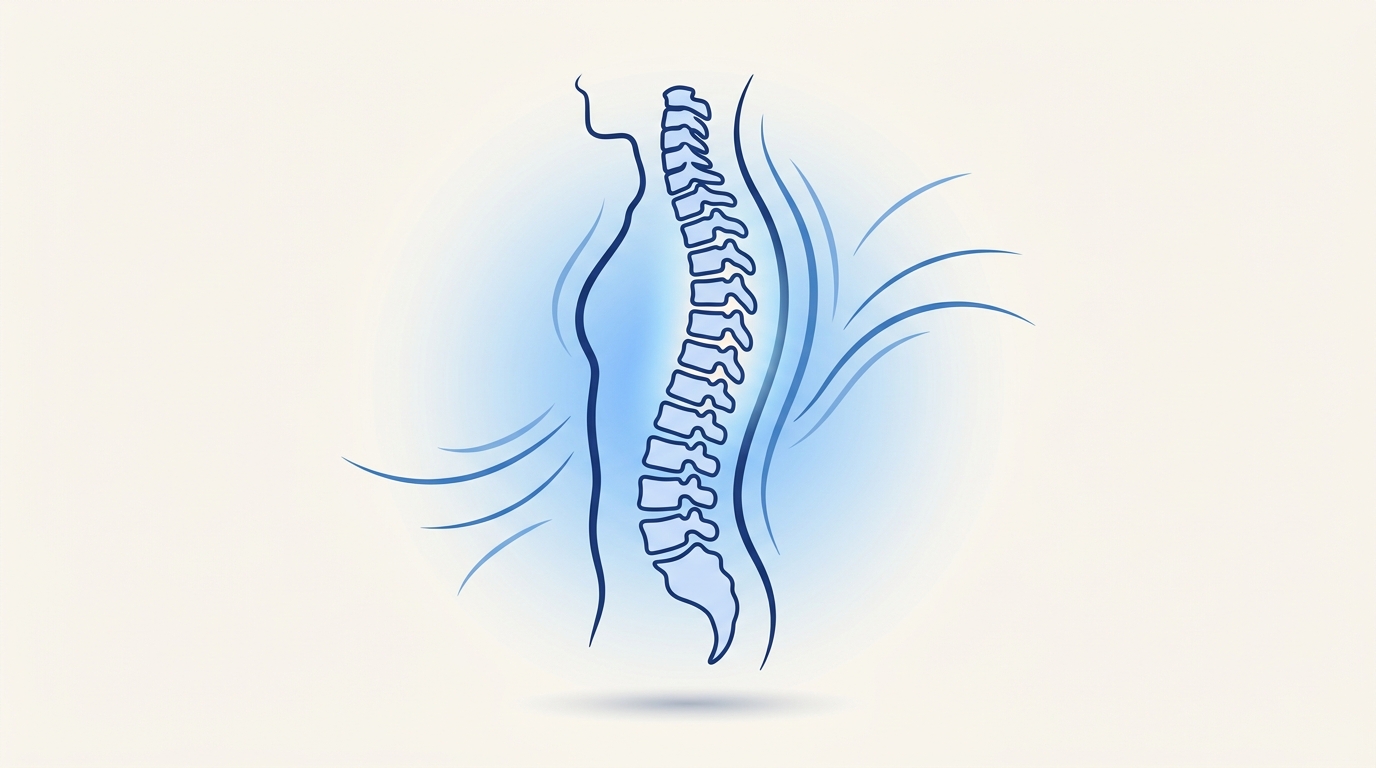
Illustration of a healthy spine with the mid-back highlighted

Home Physical Therapy · Built for Max

Your Spine Sheet

Two parts: the program Tara (KORT) actually prescribed, plus the thoracic-extension mobility you asked me to research for the T6–T7 mid-back. Move gently, breathe, and check each one off. 💙

PT-prescribed · 3 Thoracic add-ons · 8 ~15–20 min Daily
0 of 11 done
Let's tune the spine. 🎯
Everything done today — beautiful work, Max. That's how we tune. 💙

🧭 How to use this sheet

🩺 Your therapist's programPrescribed by Tara Buckles · KORT PT

Straight from your KORT / MedBridge sheet — this is your baseline. Each one is 10 reps × 3 sets, once daily (7×/week).

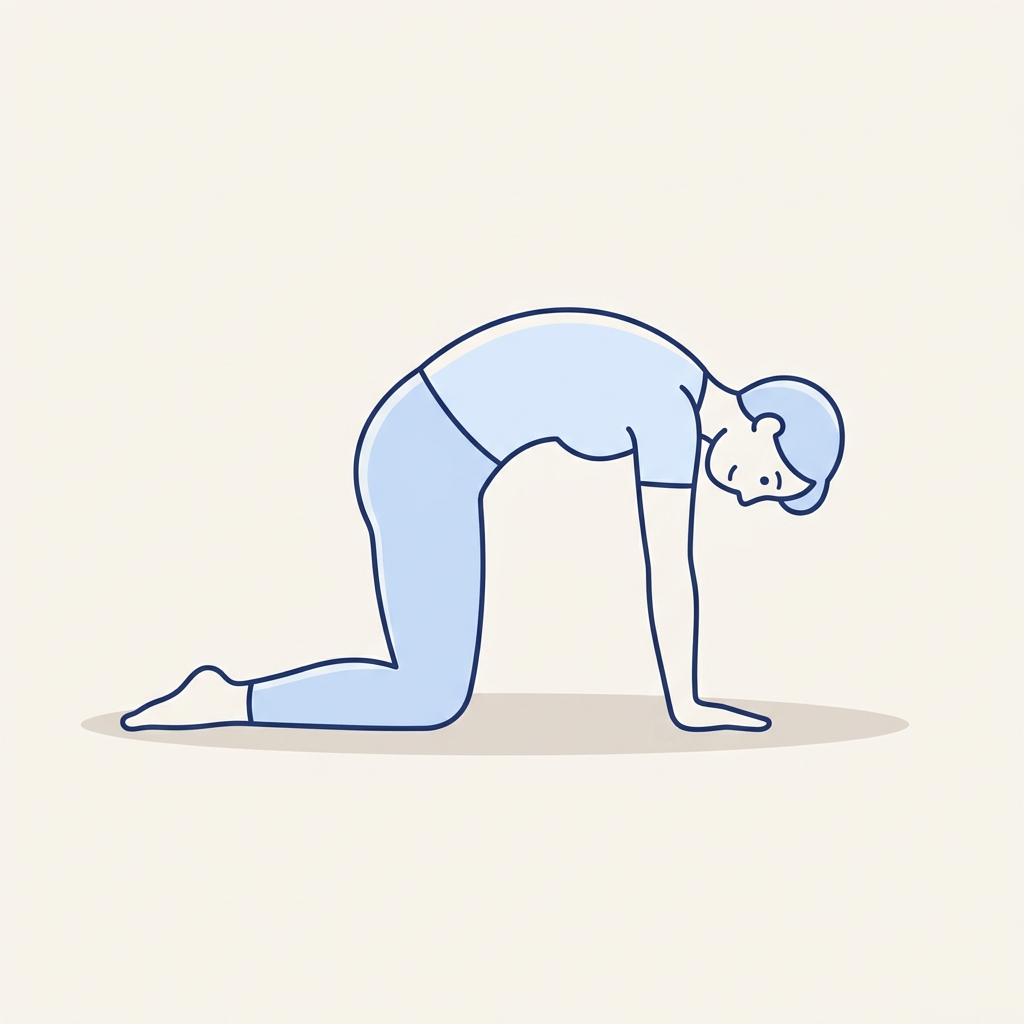
Quadruped cat with posterior pelvic tilt

Quadruped Cat with Posterior Pelvic Tilt

Mobility · PT

Rounds and mobilises the whole spine with a tailbone tuck.

  1. Begin on all fours — hands directly under your shoulders, knees under your hips, back straight.
  2. Round your back up toward the ceiling, then tilt your pelvis as if tucking your tailbone between your legs.
  3. Hold briefly, return to the start, and repeat.
10 reps × 3 sets · daily Curve your entire back; slow and controlled
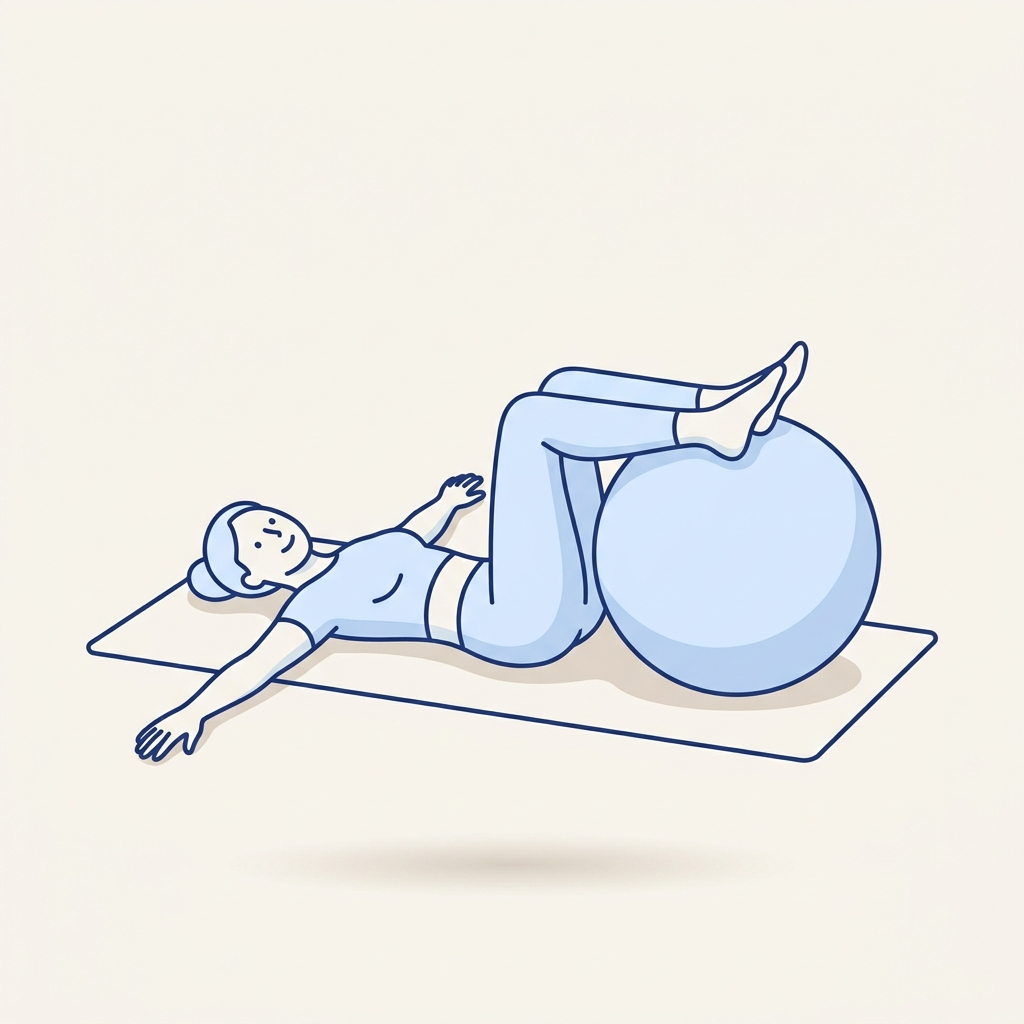
Supine lower trunk rotation with swiss ball

Supine Lower Trunk Rotation with Swiss Ball

Rotation · PT

Gentle lower-trunk rotation with the ball supporting your legs.

  1. Lie on your back with your legs resting on a swiss ball, knees bent to 90°.
  2. Roll your legs to one side, then slowly return to the start.
  3. Repeat to the other side.
10 reps × 3 sets · daily Keep abs tight and both shoulders on the floor
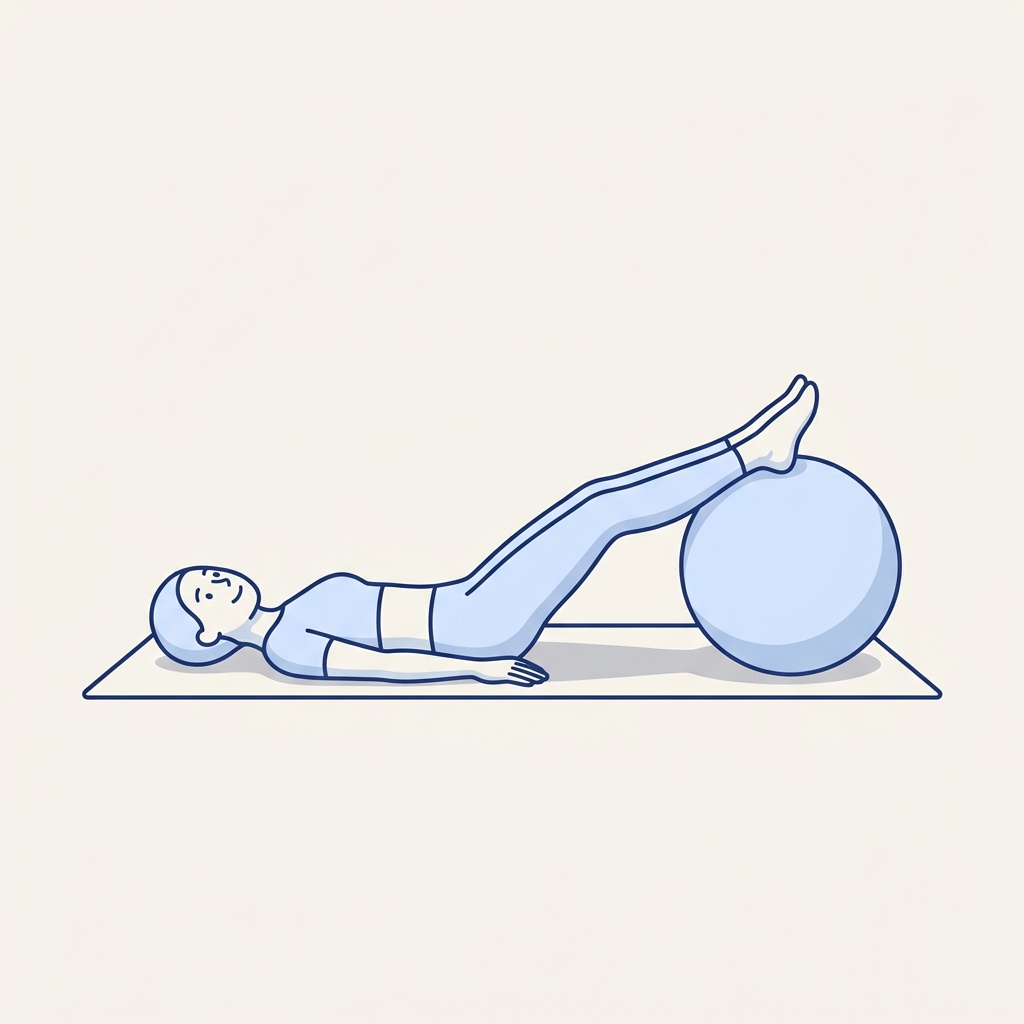
Supine hip and knee flexion with swiss ball

Supine Hip & Knee Flexion AROM with Swiss Ball

Mobility · PT

Active hip & knee range of motion, low back supported.

  1. Lie on your back with your heels resting on a swiss ball.
  2. Roll the ball away by straightening your knees and hips.
  3. Roll it back toward yourself and repeat.
10 reps × 3 sets · daily Keep your low back flat against the floor
One honest note. These three — cat-with-pelvic-tilt, lower-trunk rotation, and hip-&-knee flexion — are lower-trunk / core mobility moves, not thoracic extensions. They may be from an earlier part of your care. Since you flagged a mid-back / T6–T7 issue right now, it's worth a quick message to Tara to confirm whether this is still your current program or whether she'd put you on thoracic work. Always follow what she tells you over anything below.

🌀 Thoracic extension add-onsResearched for you · review with Tara

The mid-back (T6–T7) extension work you asked me to dig up. Gentle and supportive — run them by Tara before relying on them.

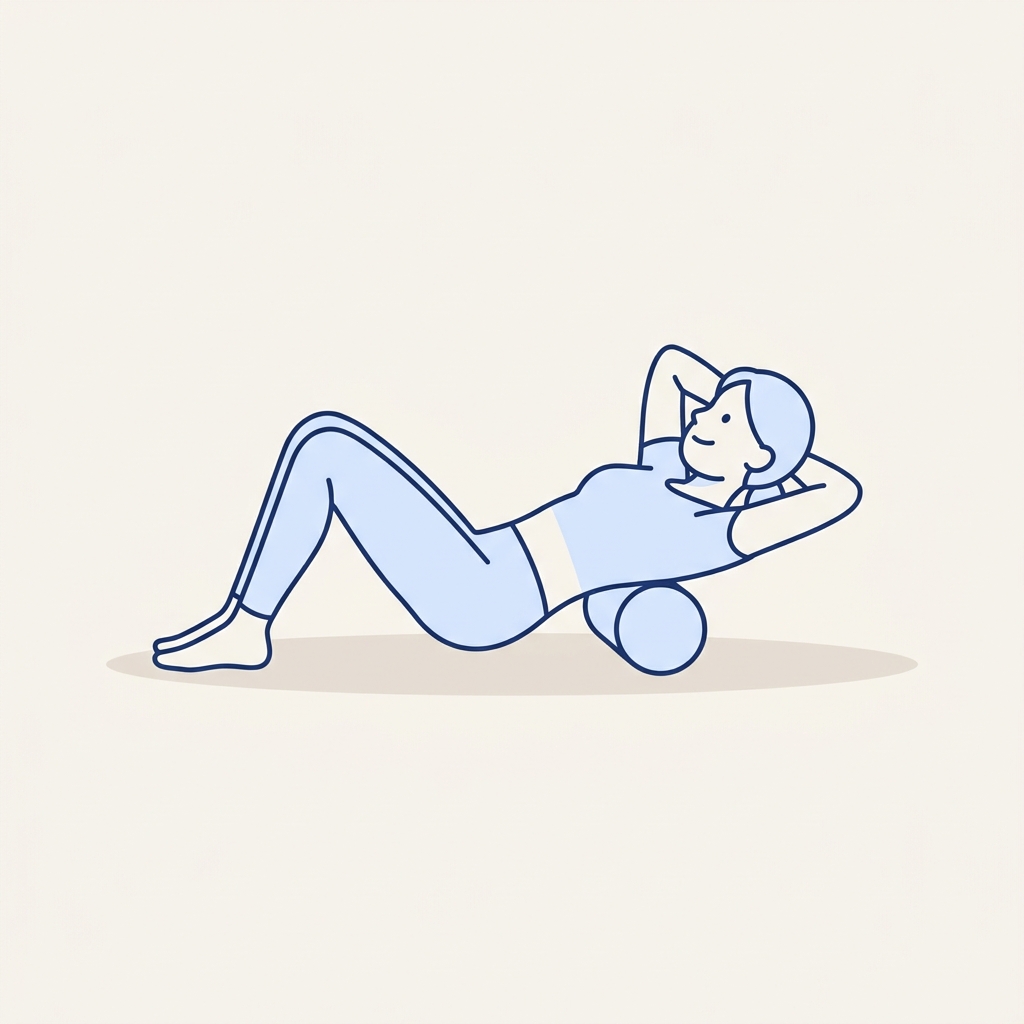
Foam roller thoracic extension

1 · Foam Roller Thoracic Extension

Mobility

The cornerstone — opens the mid-back segment by segment.

  1. Lie on your back with a foam roller across your mid-back, just below the shoulder blades. Knees bent, feet flat.
  2. Lace your hands behind your head to cradle your neck.
  3. Exhale and gently arch your upper back over the roller, then return.
  4. Roll up an inch and repeat to mobilise the next segment.
8–10 extensions · 3 spots · 1–2×/day Keep the low back neutral — bend the mid-back Stop if it radiates or tingles
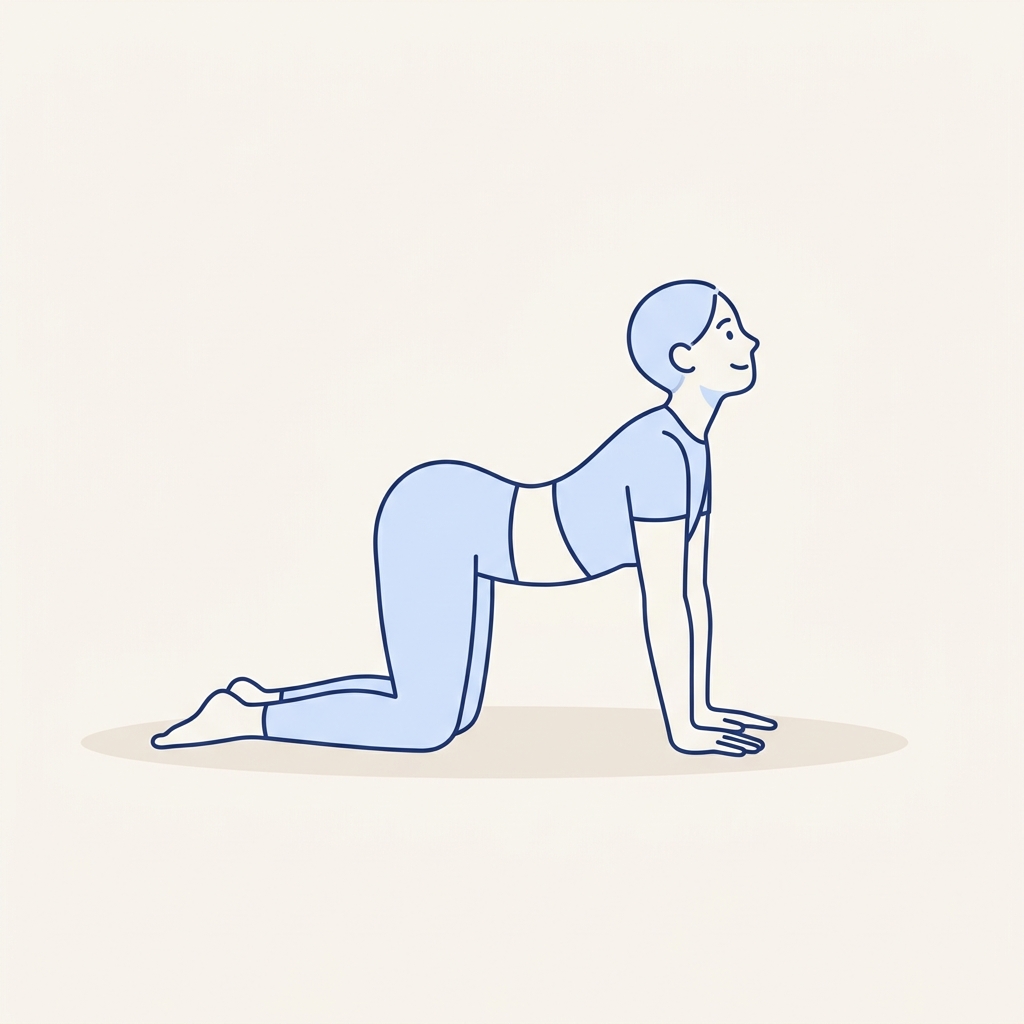
Cat-cow pose

2 · Cat–Cow

Mobility

Gentle flexion/extension to warm the whole spine.

  1. On hands and knees — hands under shoulders, knees under hips.
  2. Inhale: drop your belly, lift your chest and gaze (Cow).
  3. Exhale: round your back to the ceiling (Cat).
  4. Flow slowly between the two.
10 slow cycles · 1–2×/day Lead from the mid-back, move with the breath
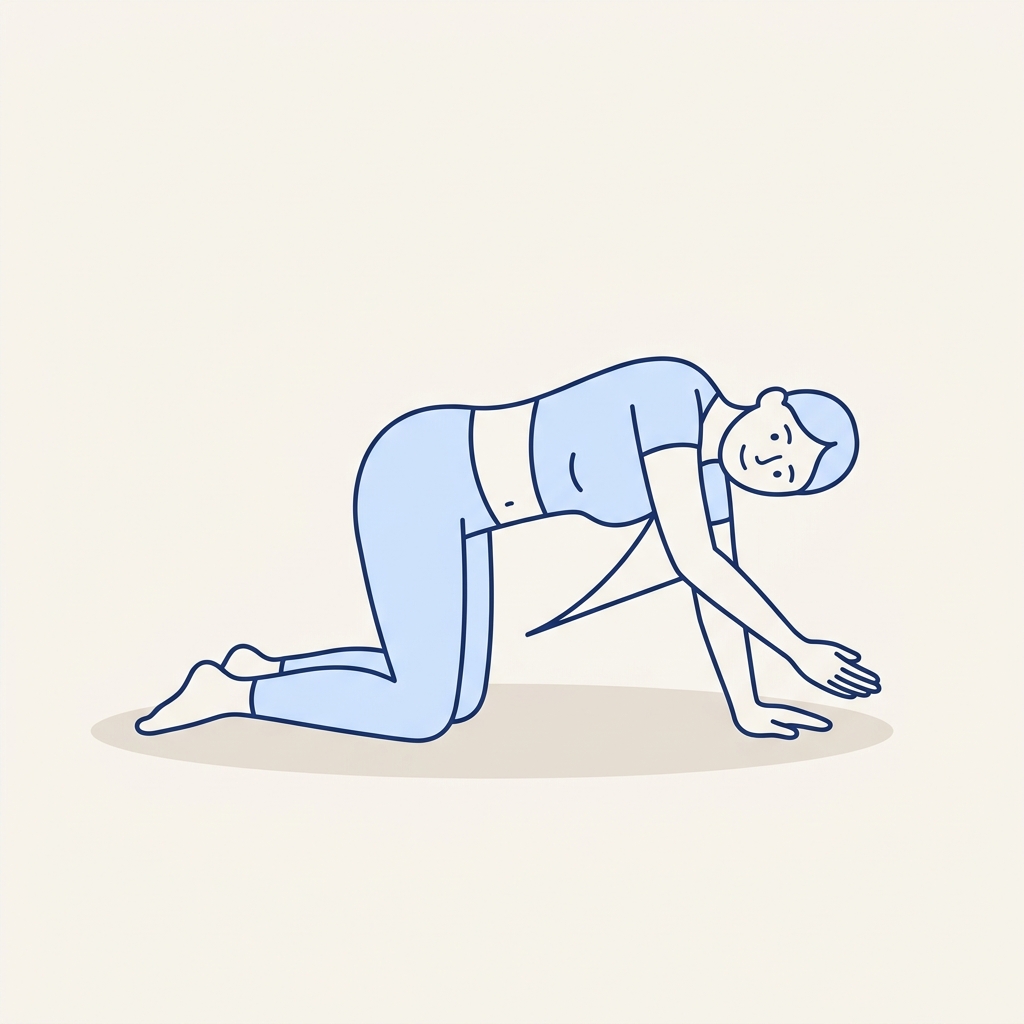
Thread the needle stretch

3 · Thread the Needle

Rotation

Rotation + reach through the mid-back.

  1. On hands and knees, slide one arm under your body and across, palm up.
  2. Lower that shoulder and the side of your head toward the floor.
  3. Hold, then unwind and reach the same arm up to the ceiling.
8 reps (or 20–30s hold) each side · 1×/day Hips stay stacked over knees — rotate the upper back
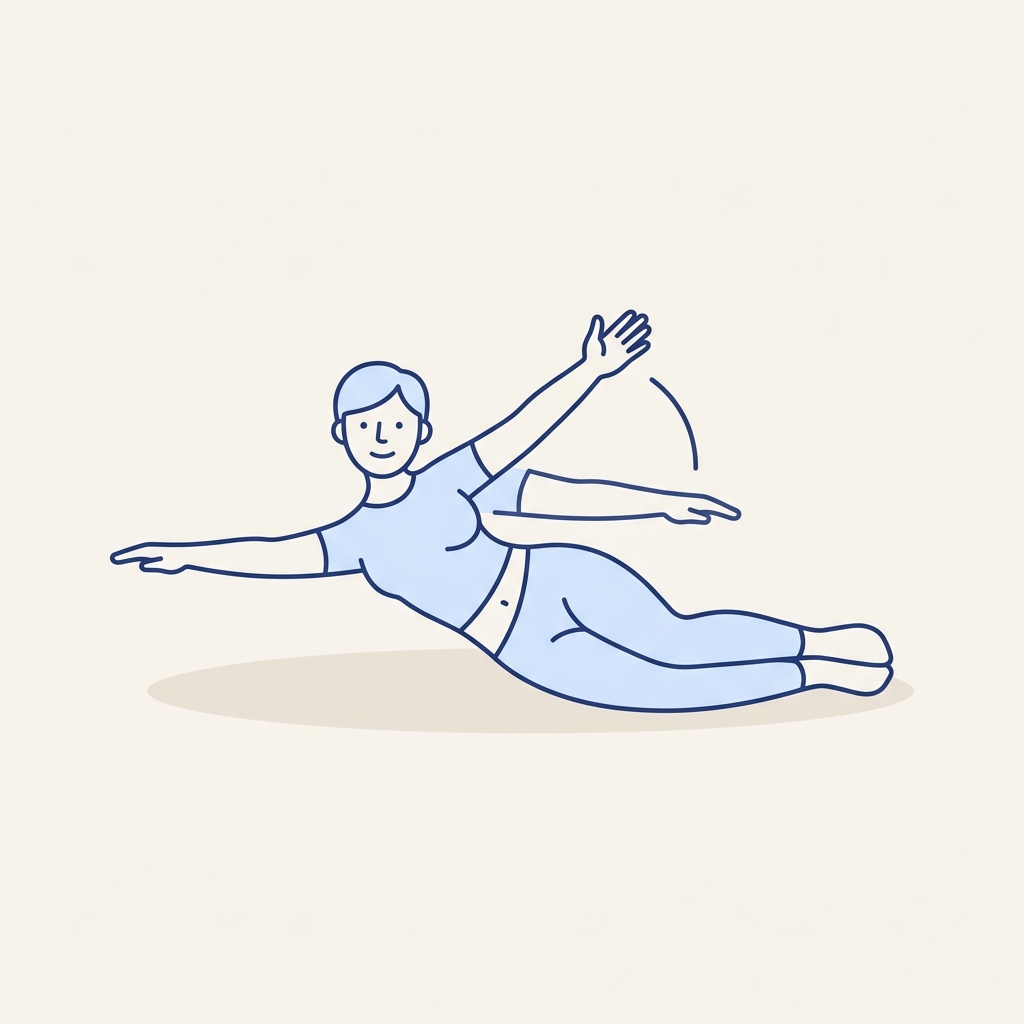
Open book rotation stretch

4 · Open Book

Rotation

Thoracic rotation with a chest opener.

  1. Lie on your side, knees bent and stacked, arms straight out front, palms together.
  2. Keeping knees down, sweep your top arm up and over to open toward the floor behind you.
  3. Follow your hand with your eyes, then return.
8–10 reps each side · 1×/day Twist from the mid-back; keep knees together and still
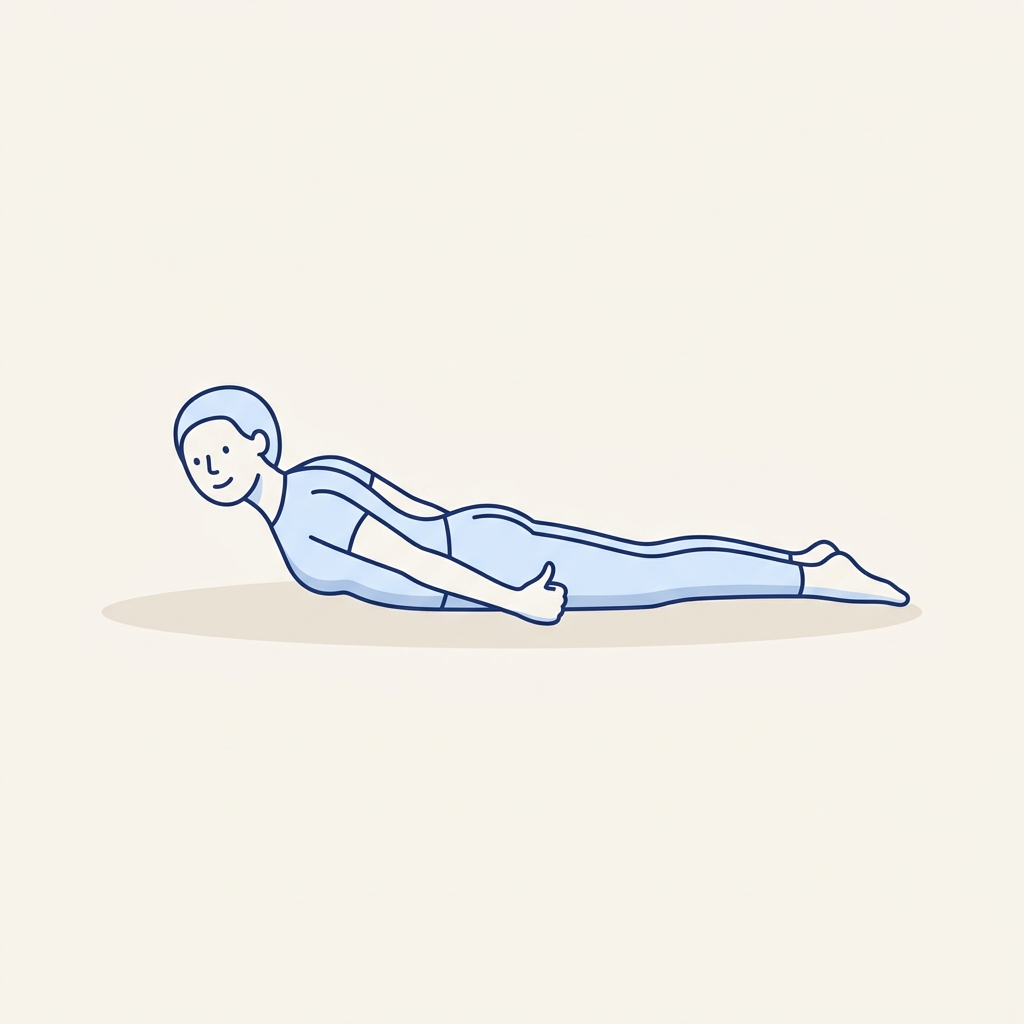
Prone cobra exercise

5 · Prone Cobra

Strength

Builds the mid-back and posture muscles.

  1. Lie face down, arms at your sides.
  2. Gently lift your chest and head a few inches; squeeze your shoulder blades together.
  3. Rotate your thumbs up to the ceiling. Hold, then lower.
10–12 reps · hold 3–5s · 1×/day Gaze down, neck long. Small range is plenty Lift less if the low back pinches
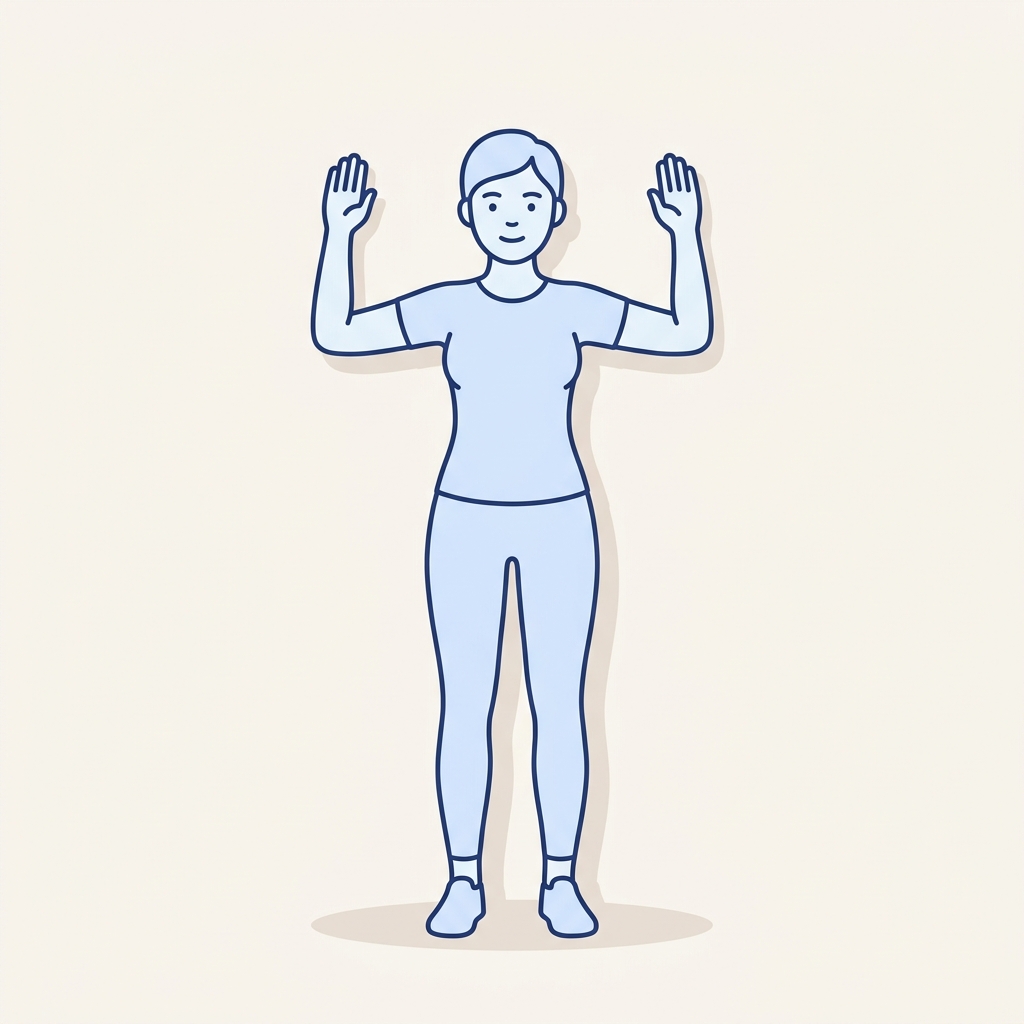
Wall angels exercise

6 · Wall Angels

Strength · Posture

Scapular control and an upright extension posture.

  1. Stand with your back flat against a wall, elbows bent ~90° in a goalpost.
  2. Keep the backs of your arms on the wall and slide them up overhead as far as contact allows.
  3. Slide back down with control.
10–15 slow reps · 1×/day Keep low back, head & arms on the wall; ribs down
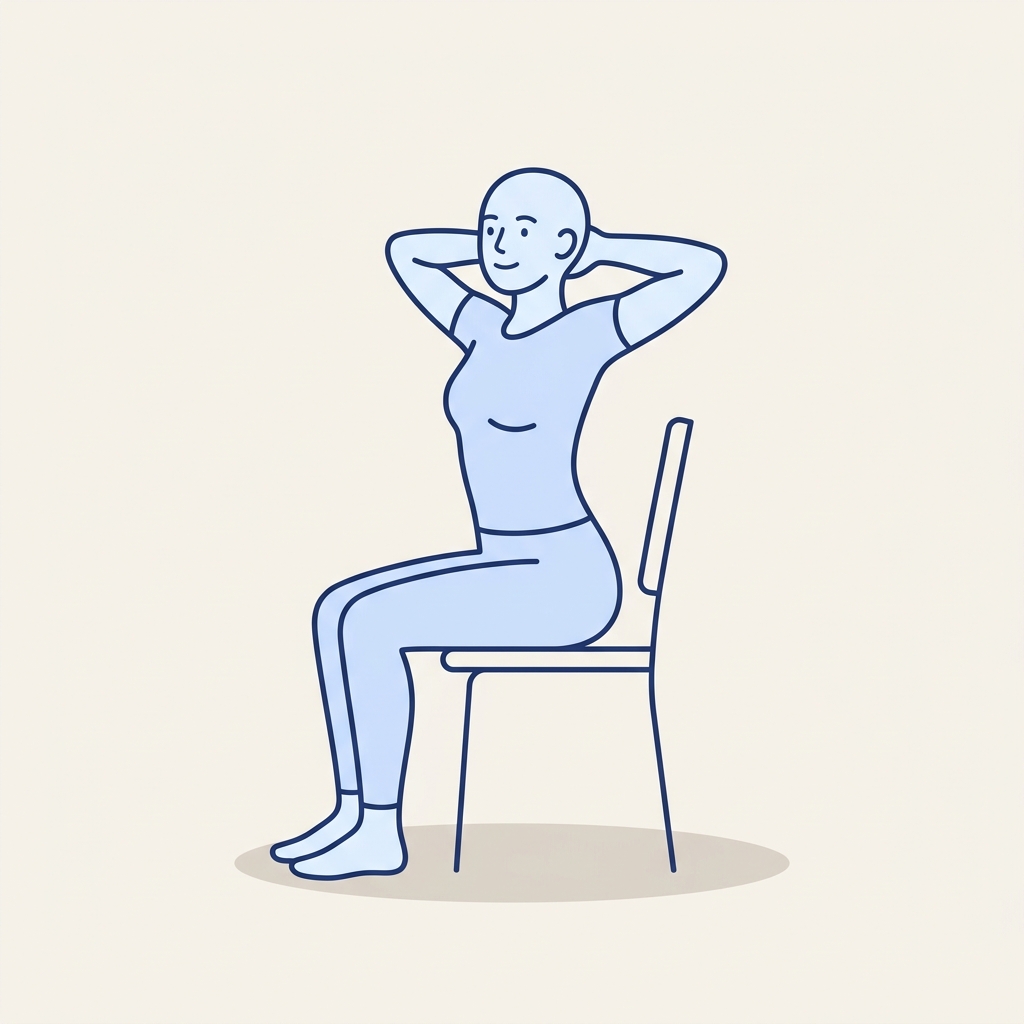
Seated thoracic extension

7 · Seated Thoracic Extension

Active · Anywhere

Active mid-back extension — perfect at a desk.

  1. Sit tall on a firm chair. Lace your hands loosely behind your neck, elbows wide.
  2. Gently arch your mid-back backward, lifting your chest and elbows toward the ceiling.
  3. Return to tall and repeat.
10 reps · up to 3–4×/day Extend over the mid-back, not the low back
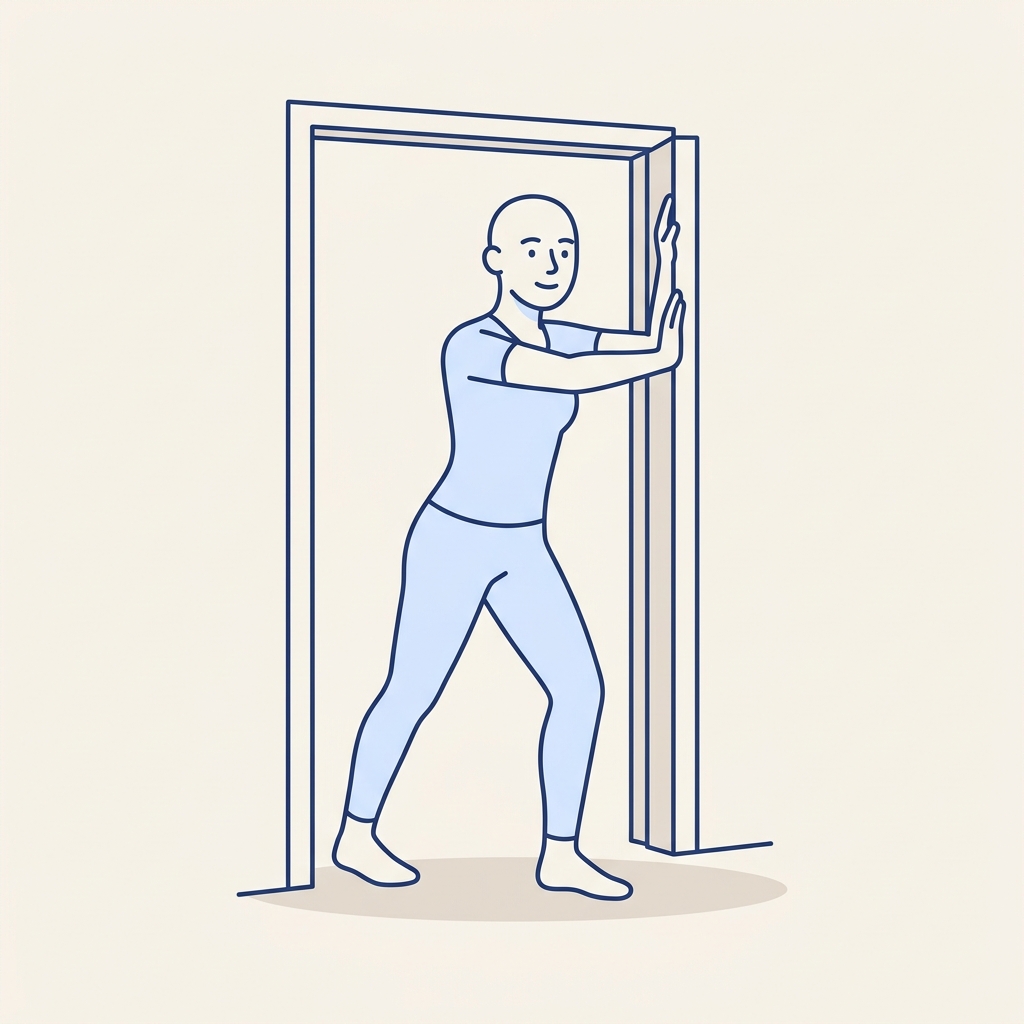
Doorway pectoral stretch

8 · Doorway Pec Stretch

Stretch

Opens the chest so the mid-back can extend.

  1. Stand in a doorway, forearms on the frame, elbows about shoulder height.
  2. Step one foot through and gently lean your chest forward.
  3. Feel a stretch across the front of the chest/shoulders. Hold.
Hold 20–30s · 2–3× · 1–2×/day Ribs down, core gently on; breathe into it
A quick truth-check on the vertebrae. You flagged the 6th–7th as the mid-back (thoracic, T6–T7), so this sheet centres on thoracic extension. If your therapist actually meant the neck (cervical, C6–C7) — the more common spot for a pinched nerve — tell me and I'll swap in neck-specific work (chin tucks, nerve glides). The thoracic work here helps either way.

🚩 Stop and check in if you notice…

When in doubt — stop, and message your therapist.

This sheet is general educational information we put together to support the program your physical therapist prescribed. It is not medical advice and does not replace your therapist or doctor. Stop any exercise that increases your pain, and check with your PT before changing your routine.